
Digital Transformation: A Roadmap for Modern Businesses
Digital Transformation: A Roadmap for Modern Businesses
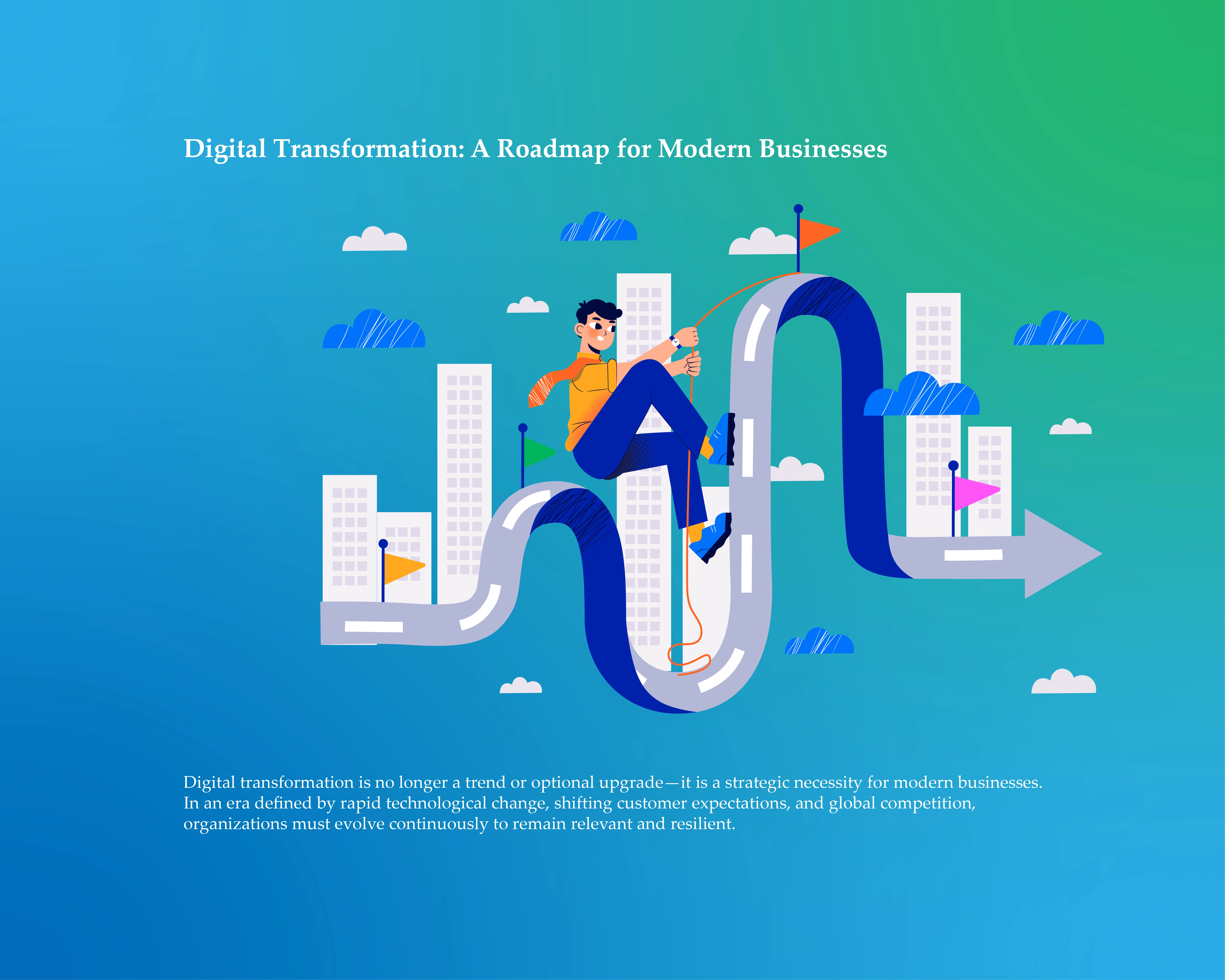
Digital transformation is no longer a trend or optional upgrade—it is a strategic necessity for modern businesses. In an era defined by rapid technological change, shifting customer expectations, and global competition, organizations must evolve continuously to remain relevant and resilient.
At its core, digital transformation is about using technology to fundamentally change how a business operates, delivers value, and adapts to the future. This journey requires more than adopting new tools; it demands a clear roadmap that aligns technology, people, and processes with long-term business goals.
This article outlines a practical roadmap for digital transformation and explains how modern businesses can navigate this journey successfully.
Understanding Digital Transformation
Digital transformation involves integrating digital technologies into every aspect of a business. This includes operations, customer experience, decision-making, and organizational culture. The goal is not just efficiency, but agility, innovation, and sustainable growth.
Key elements of digital transformation include:
Automation of manual processes
Data-driven decision-making
Cloud-based infrastructure
Enhanced customer experiences
Continuous innovation
Organizations that approach digital transformation strategically gain the ability to respond faster to market changes and customer needs.
Step 1: Define a Clear Vision and Strategy
Every successful digital transformation begins with a clear vision. Businesses must define what transformation means for them and how it aligns with their objectives.
Questions to consider include:
What problems are we trying to solve?
How can technology improve customer value?
Which processes need modernization?
What outcomes define success?
Leadership commitment is critical at this stage. Digital transformation must be driven from the top, with a shared understanding across the organization.
Step 2: Assess Current Capabilities and Gaps
Before implementing new technologies, businesses must evaluate their existing systems, processes, and skills. This assessment helps identify gaps, inefficiencies, and opportunities for improvement.
Key areas to evaluate:
Legacy systems and infrastructure
Data availability and quality
Employee digital skills
Security and compliance readiness
This step ensures that transformation efforts are focused and realistic rather than reactive or fragmented.
Step 3: Build a Cloud-First Foundation
Cloud computing is a cornerstone of digital transformation. It provides the scalability, flexibility, and cost efficiency modern businesses need to innovate and grow.
Cloud platforms allow organizations to:
Deploy applications faster
Scale resources based on demand
Reduce infrastructure costs
Enable remote and hybrid work
Providers such as Amazon Web Services and Microsoft Azure offer a wide range of tools that support cloud-native development, data analytics, and automation.
Step 4: Leverage Data as a Strategic Asset
Data is at the heart of digital transformation. Modern businesses generate massive amounts of data, but true value comes from turning that data into insights.
A strong data strategy includes:
Centralized data management
Real-time analytics and reporting
Predictive and prescriptive insights
Data governance and security
With intelligent data platforms, organizations can make faster, more informed decisions and uncover new growth opportunities.
Step 5: Automate Processes for Efficiency and Scale
Automation is a powerful driver of transformation. By automating repetitive and time-consuming tasks, businesses can reduce errors, lower costs, and improve productivity.
Automation enables organizations to:
Streamline operations across departments
Improve consistency and accuracy
Scale without increasing overhead
Free employees for higher-value work
Technologies such as robotic process automation (RPA) and AI-driven workflows are becoming standard components of modern business operations.
Step 6: Enhance Customer Experience Through Digital Tools
Customer experience is one of the most important outcomes of digital transformation. Today’s customers expect seamless, personalized, and responsive interactions across all channels.
Digital tools help businesses:
Personalize products and services
Offer 24/7 customer support through automation
Integrate online and offline experiences
Collect and act on customer feedback
CRM and experience platforms like Salesforce enable organizations to build stronger, data-driven relationships with their customers.
Step 7: Modernize Software Development and Delivery
Digital transformation requires faster innovation cycles. Modern businesses adopt agile development practices and DevOps automation to accelerate software delivery.
Benefits include:
Faster time-to-market
Continuous improvement through feedback
Higher software quality and reliability
Better collaboration between teams
By modernizing development workflows, businesses can respond quickly to market demands and technological changes.
Step 8: Strengthen Security and Compliance
As businesses become more digital, security and compliance become even more critical. Digital transformation must include robust security measures to protect data, systems, and customer trust.
Key security practices include:
Automated threat detection
Identity and access management
Data encryption and backups
Continuous compliance monitoring
Security should be embedded into every layer of the digital ecosystem, not treated as an afterthought.
Step 9: Invest in People and Culture
Technology alone does not drive transformation—people do. A successful digital transformation roadmap includes investment in skills, training, and cultural change.
Organizations must:
Upskill and reskill employees
Encourage innovation and experimentation
Promote cross-functional collaboration
Embrace change and continuous learning
A digitally empowered workforce is essential for sustaining transformation over time.
Step 10: Measure, Optimize, and Evolve
Digital transformation is not a one-time project. It is an ongoing journey that requires continuous measurement and optimization.
Businesses should track:
Operational efficiency improvements
Customer satisfaction and engagement
Revenue growth and cost savings
Technology performance and adoption
Regular evaluation ensures that digital initiatives remain aligned with business goals and evolving market conditions.
Challenges in Digital Transformation
Despite its benefits, digital transformation comes with challenges, including:
Resistance to change
Integration with legacy systems
Data silos and governance issues
Budget and resource constraints
Addressing these challenges requires strong leadership, clear communication, and a phased approach to implementation.
No gallery images available for this blog.
Digital transformation is a strategic journey that reshapes how modern businesses operate, compete, and grow. By following a clear roadmap—starting with vision and strategy, building a strong digital foundation, and continuously evolving—organizations can unlock long-term value and resilience.
In a rapidly changing digital world, businesses that embrace transformation are better equipped to innovate, serve their customers, and thrive in the future.
Future-ready software development, automation, and cloud solutions for businesses
Comments (0)
No comments yet. Be the first to comment!