
How Cloud Computing is Changing Modern Businesses
How Cloud Computing is Changing Modern Businesses
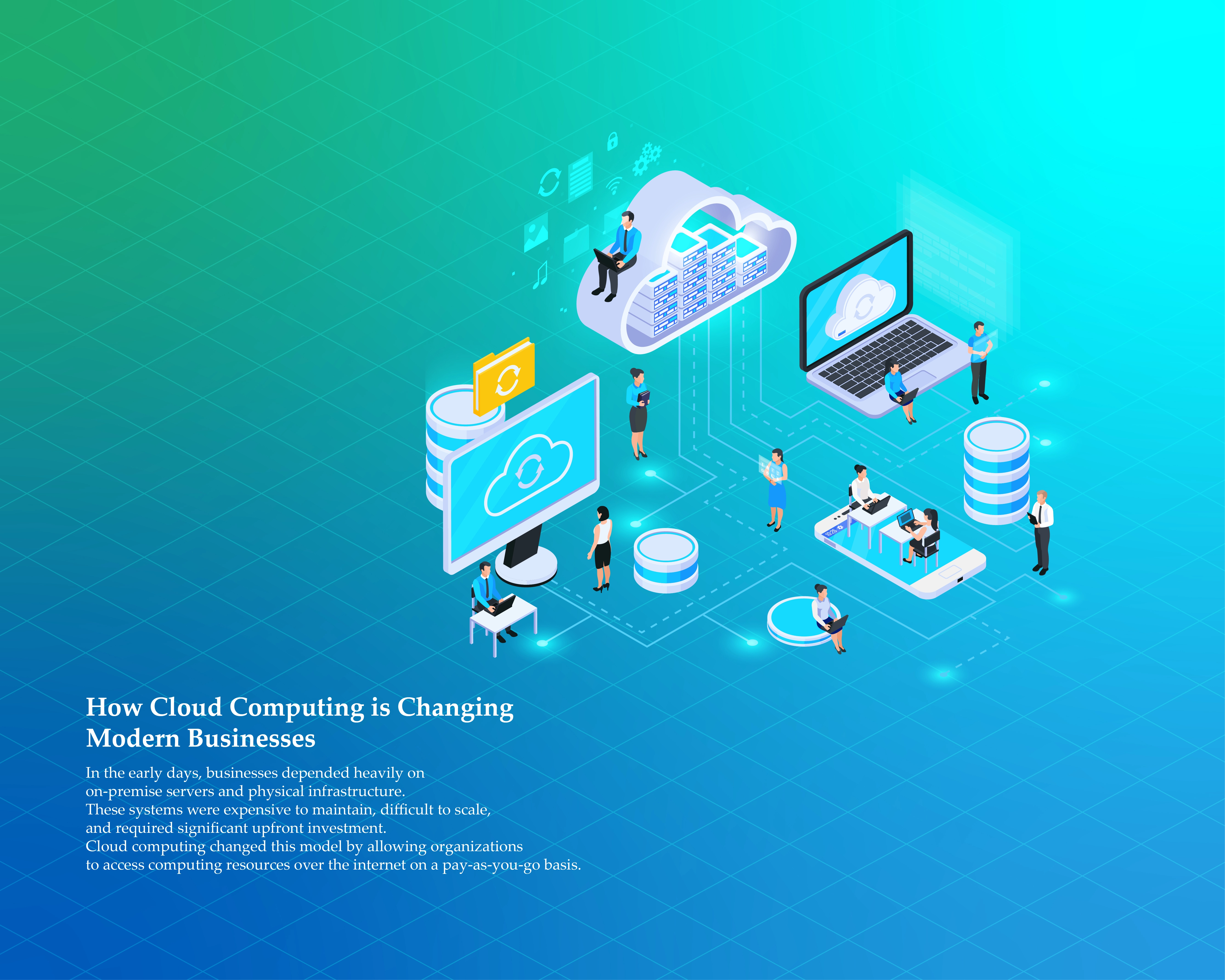
Cloud computing has become one of the most transformative technologies of the modern business era. What began as a way to store data remotely has evolved into a powerful ecosystem that drives innovation, scalability, and operational efficiency. Today, organizations of all sizes rely on cloud computing to run applications, manage data, collaborate remotely, and respond quickly to market changes.
In an increasingly digital and competitive environment, cloud computing is no longer just an IT decision—it is a strategic business enabler. This article explores how cloud computing is changing modern businesses, the key benefits it delivers, and why it has become essential for long-term success.
The Evolution of Cloud Computing
In the early days, businesses depended heavily on on-premise servers and physical infrastructure. These systems were expensive to maintain, difficult to scale, and required significant upfront investment. Cloud computing changed this model by allowing organizations to access computing resources over the internet on a pay-as-you-go basis.
Modern cloud platforms now offer far more than storage and hosting. They provide advanced services such as artificial intelligence, big data analytics, automation, and security—all delivered through flexible, scalable environments. Companies like Amazon Web Services and Google Cloud have played a major role in shaping today’s cloud-first business landscape.
Enabling Scalability and Business Agility
One of the most significant ways cloud computing is changing modern businesses is through scalability. Traditional infrastructure often limits growth, requiring long planning cycles and costly upgrades. Cloud computing removes these barriers.
With cloud services, businesses can:
Scale resources up or down based on demand
Launch new products faster
Handle traffic spikes without performance issues
Enter new markets with minimal infrastructure setup
This agility allows organizations to respond quickly to customer needs and market opportunities, giving them a strong competitive advantage.
Cost Efficiency and Smarter IT Spending
Cloud computing has fundamentally changed how businesses manage IT costs. Instead of large capital expenditures on hardware and maintenance, companies now operate on a usage-based pricing model.
Key cost benefits include:
Reduced infrastructure and maintenance expenses
Lower energy and operational costs
Predictable monthly spending
Better resource utilization
By shifting IT from a fixed cost to a flexible operational expense, businesses can invest more resources into innovation, customer experience, and growth.
Driving Innovation Through Advanced Technologies
Cloud computing serves as a foundation for innovation. Modern cloud platforms provide access to advanced technologies that were once available only to large enterprises.
Through cloud services, businesses can leverage:
Artificial intelligence and machine learning
Big data processing and analytics
Internet of Things (IoT) platforms
Automation and DevOps tools
For example, organizations using Microsoft Azure can integrate AI models, analytics tools, and automation into their applications without building everything from scratch. This accelerates development cycles and encourages experimentation.
Supporting Remote and Hybrid Workforces
The modern workplace has evolved, and cloud computing plays a critical role in enabling remote and hybrid work models. Cloud-based tools allow employees to access systems, data, and applications from anywhere, at any time.
Cloud computing enables:
Real-time collaboration and file sharing
Secure remote access to business systems
Cloud-based communication and productivity tools
Centralized management of distributed teams
This flexibility not only improves productivity but also helps businesses attract global talent and maintain continuity during disruptions.
Enhancing Data Management and Analytics
Data is one of the most valuable assets for modern businesses, and cloud computing has transformed how data is stored, managed, and analyzed. Cloud platforms offer scalable storage and powerful analytics capabilities that turn raw data into actionable insights.
Businesses use cloud-based analytics to:
Monitor performance in real time
Understand customer behavior
Predict trends and demand
Improve decision-making accuracy
By centralizing data in the cloud, organizations break down silos and create a unified view of their operations.
Strengthening Security and Compliance
Security was once a major concern for cloud adoption, but today cloud providers often offer stronger security than traditional on-premise systems. Modern cloud platforms invest heavily in advanced security technologies, monitoring, and compliance certifications.
Cloud security benefits include:
Automated updates and patch management
Data encryption at rest and in transit
Continuous threat detection
Built-in compliance tools
For many businesses, cloud computing improves security posture while reducing the burden on internal IT teams.
Improving Business Continuity and Disaster Recovery
Downtime can be costly and damaging to a company’s reputation. Cloud computing enhances business continuity by offering built-in backup, redundancy, and disaster recovery solutions.
With cloud-based systems, businesses can:
Automatically back up critical data
Recover systems quickly after failures
Minimize service disruptions
Ensure operational resilience
This level of reliability is difficult and expensive to achieve with traditional infrastructure.
Enabling Faster Time-to-Market
Speed is critical in today’s digital economy. Cloud computing allows businesses to develop, test, and deploy applications faster than ever before.
By using cloud-based development environments and DevOps practices, organizations can:
Reduce development cycles
Deploy updates continuously
Experiment with new features safely
Respond quickly to customer feedback
Faster time-to-market helps businesses stay relevant and competitive in rapidly changing industries.
Challenges and Strategic Considerations
Despite its benefits, cloud computing also presents challenges that businesses must address. These include:
Managing cloud costs effectively
Ensuring data governance and compliance
Integrating cloud systems with legacy applications
Avoiding vendor lock-in
Successful cloud adoption requires a clear strategy, skilled teams, and continuous optimization to align technology with business goals.
No gallery images available for this blog.
Cloud computing is changing modern businesses by making them more agile, innovative, and resilient. It enables organizations to scale effortlessly, reduce costs, support modern work environments, and harness advanced technologies that drive growth.
In a world where digital transformation is no longer optional, cloud computing provides the foundation businesses need to compete and thrive. Companies that embrace cloud-first strategies are better equipped to adapt, innovate, and succeed in the digital future.
Future-ready software development, automation, and cloud solutions for businesses
Comments (0)
No comments yet. Be the first to comment!