
How Automation is Shaping the Future of Software …
How Automation is Shaping the Future of Software and Modern Businesses
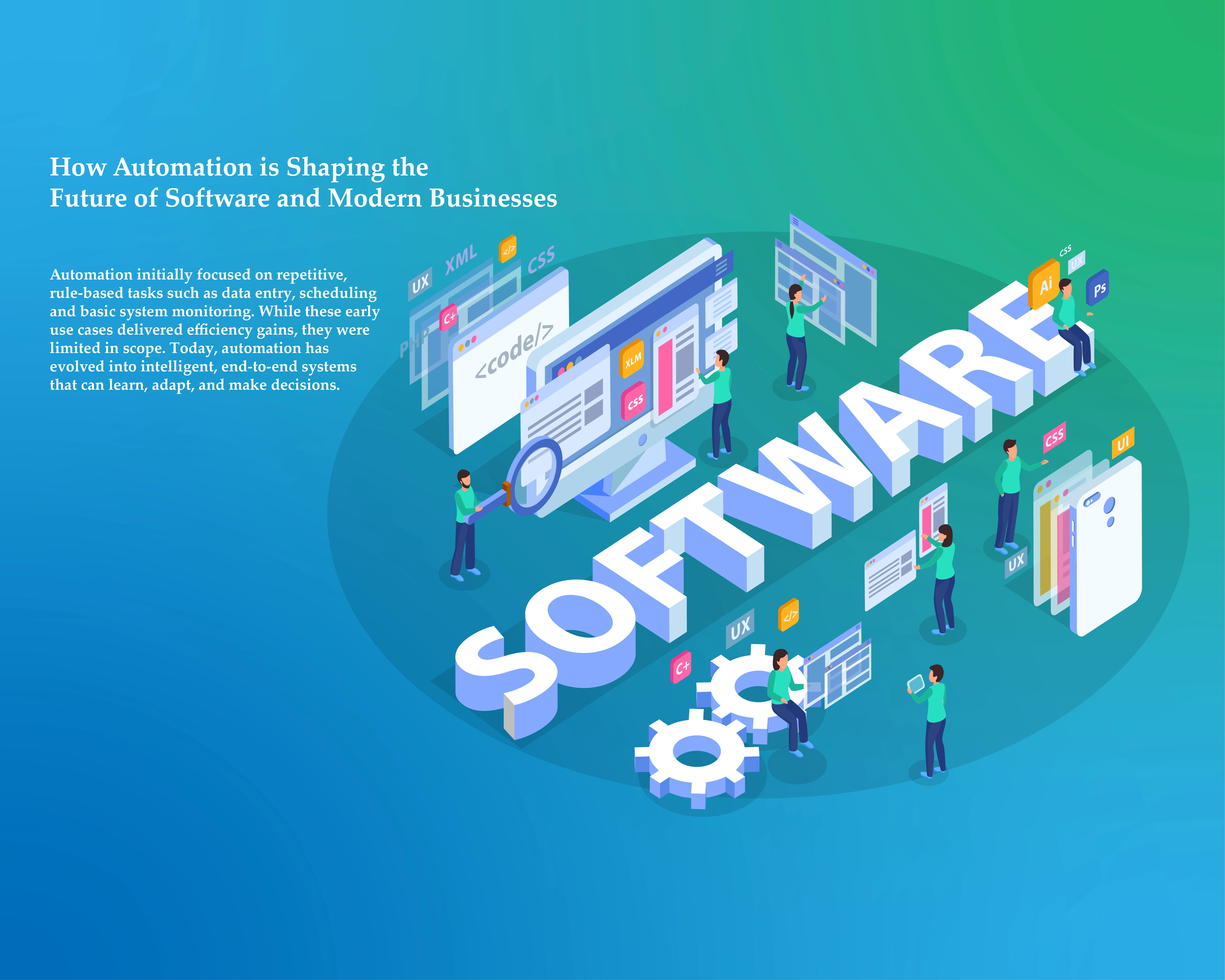
Automation has moved far beyond simple task execution. In today’s fast-evolving digital economy, automation is reshaping how software is built, deployed, and used—and how businesses operate, compete, and grow. As organizations face increasing pressure to deliver faster, smarter, and more personalized services, automation has become a critical driver of innovation and efficiency.
From intelligent software systems to automated business workflows, automation is shaping the future of both technology and modern enterprises. This transformation is not just about reducing manual effort; it is about creating adaptive, scalable, and data-driven systems that enable sustainable growth.
This article explores how automation is influencing the future of software development and modern business operations, and why it has become a cornerstone of digital success.
The Evolution of Automation in Software and Business
Automation initially focused on repetitive, rule-based tasks such as data entry, scheduling, and basic system monitoring. While these early use cases delivered efficiency gains, they were limited in scope. Today, automation has evolved into intelligent, end-to-end systems that can learn, adapt, and make decisions.
Modern automation integrates artificial intelligence (AI), machine learning (ML), analytics, and cloud computing. Tools powered by platforms like OpenAI have accelerated this evolution, enabling software to understand language, recognize patterns, and continuously improve performance.
As a result, automation is no longer just an operational tool—it is a strategic asset.
Automation in Software Development
One of the most significant impacts of automation is in software development itself. In the past, development cycles were long and heavily manual. Today, automation has transformed how software is designed, tested, deployed, and maintained.
Automation in software development enables:
Continuous integration and continuous deployment (CI/CD)
Automated testing and quality assurance
Faster bug detection and resolution
Consistent and reliable releases
DevOps automation tools allow teams to deploy updates rapidly without sacrificing quality. Cloud platforms such as Microsoft Azure support automated pipelines that reduce time-to-market and improve collaboration between development and operations teams.
Intelligent Business Process Automation
Beyond software creation, automation is redefining how businesses run their daily operations. Intelligent Business Process Automation (BPA) combines robotic process automation (RPA) with AI to manage complex workflows across departments.
Businesses use automation to:
Process invoices and payments
Manage customer onboarding
Handle order fulfillment
Generate reports and analytics
Solutions from companies like UiPath enable organizations to automate entire workflows, reducing errors and improving operational speed. This allows teams to focus on strategy and innovation rather than repetitive tasks.
Enhancing Customer Experience Through Automation
Customer expectations in the digital age are higher than ever. Customers want fast responses, personalized interactions, and seamless experiences across channels. Automation plays a vital role in meeting these demands.
Modern businesses rely on automation to deliver:
AI-powered chatbots and virtual assistants
Automated customer support and ticket routing
Personalized recommendations and notifications
Real-time engagement across platforms
By automating customer-facing processes, businesses improve satisfaction while maintaining consistency and scalability. Automation ensures that customer experience remains responsive—even as businesses grow.
Data-Driven Decision Making at Scale
Data is one of the most valuable assets for modern businesses, but its true value lies in how quickly it can be analyzed and acted upon. Automation enables real-time data processing and intelligent decision-making.
Automated analytics systems:
Collect data from multiple sources
Identify trends and anomalies
Generate predictive insights
Trigger actions without human delay
This capability allows organizations to move from reactive decisions to proactive strategies. Automated insights help leaders anticipate market shifts, optimize operations, and reduce risk.
Automation and Workforce Transformation
A common misconception is that automation replaces people. In reality, automation is reshaping the workforce rather than eliminating it. Modern businesses are increasingly adopting a collaborative model where humans and automated systems work together.
Automation enables employees to:
Focus on creative and strategic tasks
Reduce workload stress and manual errors
Improve productivity and job satisfaction
Develop new digital skills
New roles such as automation architects, AI trainers, and workflow analysts are emerging, highlighting how automation is transforming—not removing—human involvement in business.
Scalability and Agility for Modern Enterprises
Markets change quickly, and businesses must adapt just as fast. Automation provides the scalability and agility required to operate in dynamic environments.
With automated systems, businesses can:
Scale operations without proportional cost increases
Respond instantly to demand fluctuations
Launch new services faster
Maintain consistency across growth phases
Cloud-based automation platforms supported by providers like Amazon Web Services enable organizations to automate infrastructure management, monitoring, and scaling with minimal manual effort.
Security, Compliance, and Risk Management
Automation also plays a critical role in improving security and compliance. Automated systems can monitor activities, detect threats, and enforce policies in real time—far more effectively than manual processes.
Key benefits include:
Automated compliance checks and reporting
Continuous security monitoring
Faster incident response
Reduced human error
In regulated industries such as finance, healthcare, and e-commerce, automation ensures consistency and accountability while minimizing operational risk.
Challenges of Automation Adoption
Despite its advantages, automation adoption comes with challenges. Poorly planned automation can lead to inefficiencies, system complexity, or resistance from employees.
Common challenges include:
Integrating automation with legacy systems
Ensuring data quality and governance
Managing change within teams
Avoiding over-automation of critical decisions
Successful automation requires a clear strategy, ongoing evaluation, and alignment with business objectives.
The Future of Automation in Software and Business
Looking ahead, automation will become even more intelligent and autonomous. Future systems will not only execute tasks but also recommend actions, optimize workflows, and adapt to new conditions independently.
Businesses that embrace automation as a long-term investment will benefit from:
Faster innovation cycles
Greater operational resilience
Improved customer engagement
Stronger competitive positioning
Automation will continue to blur the line between software and business strategy, making technology an integral part of organizational intelligence.
No gallery images available for this blog.
Automation is shaping the future of software and modern businesses by transforming how systems are built, processes are managed, and decisions are made. It enables organizations to operate smarter, faster, and more efficiently in an increasingly complex digital world.
Companies that adopt intelligent automation today are building the foundation for tomorrow’s success. By combining automation with human creativity and strategic vision, modern businesses can thrive in the future of digital transformation.
Future-ready software development, automation, and cloud solutions for businesses
Comments (0)
No comments yet. Be the first to comment!