
How Automation is Transforming Business Operations in 2026
How Automation is Transforming Business Operations in 2026
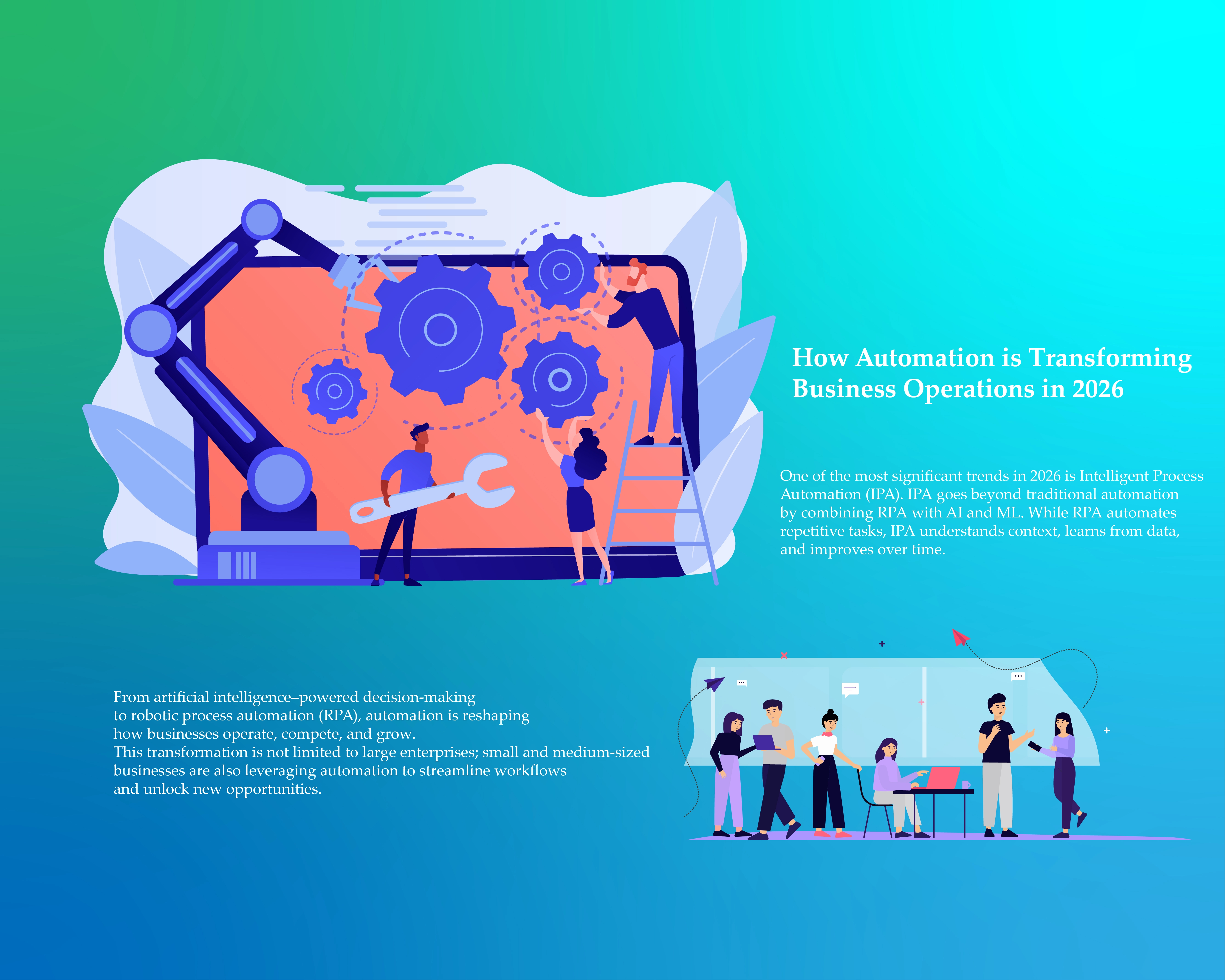
In 2026, automation is no longer a future concept—it is a foundational pillar of modern business operations. Organizations across industries are rapidly adopting automation to stay competitive, improve efficiency, reduce costs, and deliver better customer experiences. What once required large teams and manual processes is now handled by intelligent systems capable of learning, adapting, and scaling in real time.
From artificial intelligence–powered decision-making to robotic process automation (RPA), automation is reshaping how businesses operate, compete, and grow. This transformation is not limited to large enterprises; small and medium-sized businesses are also leveraging automation to streamline workflows and unlock new opportunities.
This article explores how automation is transforming business operations in 2026, the key technologies driving this change, and what organizations must do to remain future-ready.
The Evolution of Business Automation
Automation has evolved significantly over the past decade. Early automation focused on simple rule-based systems—automated emails, basic scheduling tools, and predefined workflows. In 2026, automation is far more intelligent and integrated, combining artificial intelligence (AI), machine learning (ML), data analytics, and cloud computing.
Modern automation systems can analyze vast amounts of data, make predictions, and adapt processes without constant human intervention. Tools powered by platforms such as OpenAI have enabled businesses to automate not just tasks, but decision-making itself.
This shift has transformed automation from a cost-saving tool into a strategic advantage.
Intelligent Process Automation (IPA)
One of the most significant trends in 2026 is Intelligent Process Automation (IPA). IPA goes beyond traditional automation by combining RPA with AI and ML. While RPA automates repetitive tasks, IPA understands context, learns from data, and improves over time.
For example:
Finance teams use IPA to automate invoice processing, fraud detection, and financial forecasting.
HR departments automate resume screening, onboarding, and employee performance analysis.
Supply chain teams rely on IPA to forecast demand and optimize inventory.
Platforms like UiPath have become central to enterprise automation strategies, allowing organizations to build end-to-end automated workflows with minimal coding.
Automation in Customer Experience
Customer expectations in 2026 are higher than ever. Customers demand instant responses, personalized experiences, and seamless interactions across channels. Automation plays a critical role in meeting these expectations.
AI-powered chatbots and virtual assistants now handle a large percentage of customer inquiries, providing 24/7 support without delays. Unlike earlier bots, modern systems understand natural language, sentiment, and intent, enabling more human-like interactions.
Automation also powers:
Personalized product recommendations
Automated follow-ups and notifications
Customer behavior analysis and segmentation
By automating customer-facing operations, businesses improve satisfaction while reducing operational overhead.
Data-Driven Decision Making Through Automation
In 2026, data is one of the most valuable business assets—but only if it can be analyzed and acted upon quickly. Automation enables real-time data processing and decision-making at scale.
Automated analytics systems collect data from multiple sources, clean it, analyze trends, and generate actionable insights without manual effort. This allows leaders to:
Respond faster to market changes
Identify risks and opportunities early
Make evidence-based strategic decisions
Automation ensures that insights are not delayed by human bottlenecks, giving businesses a significant competitive edge.
Workflow Automation Across Departments
Another major impact of automation in 2026 is the seamless integration of workflows across departments. Sales, marketing, finance, operations, and support systems are no longer isolated. Automation connects them into unified, intelligent workflows.
For instance:
A sales lead captured on a website automatically enters the CRM, triggers a marketing campaign, schedules a follow-up, and updates forecasting dashboards.
An order placed online automatically updates inventory, initiates shipping, generates invoices, and sends customer notifications.
Tools such as Zapier and custom-built automation systems enable businesses to eliminate silos and operate as cohesive units.
Cost Optimization and Operational Efficiency
One of the most immediate benefits of automation is cost reduction. By automating repetitive and time-consuming tasks, businesses reduce labor costs and minimize human error.
In 2026, companies are using automation to:
Reduce processing time from days to minutes
Lower error rates in data entry and reporting
Optimize resource allocation
More importantly, automation allows employees to focus on high-value work such as strategy, creativity, and innovation—activities that drive long-term growth.
Automation and Workforce Transformation
Automation is not about replacing humans; it is about augmenting human capabilities. In 2026, the workforce is evolving alongside automation.
Employees are increasingly working with automated systems rather than competing against them. New roles such as automation analysts, AI trainers, and workflow architects have emerged. Organizations are investing heavily in upskilling and reskilling their teams to adapt to this new reality.
Businesses that embrace this human–automation collaboration see higher productivity, improved employee satisfaction, and stronger innovation cultures.
Security, Compliance, and Risk Management
Automation also plays a critical role in security and compliance. Automated systems monitor transactions, detect anomalies, and enforce compliance rules in real time.
In regulated industries such as finance, healthcare, and e-commerce, automation ensures:
Continuous compliance with regulations
Automated audit trails and reporting
Faster identification of security threats
By reducing reliance on manual checks, businesses minimize risk while maintaining transparency and accountability.
Challenges of Automation in 2026
Despite its benefits, automation is not without challenges. Poorly designed automation can lead to inefficiencies, security vulnerabilities, or overdependence on technology.
Common challenges include:
Integration with legacy systems
Data quality and governance issues
Resistance to change within organizations
Ethical concerns around AI-driven decisions
Successful automation requires clear strategy, strong governance, and ongoing monitoring to ensure systems remain aligned with business goals.
The Future of Business Operations
As we move further into 2026 and beyond, automation will continue to evolve. Businesses that treat automation as a long-term strategic investment—rather than a short-term cost-cutting tool—will lead their industries.
The future belongs to organizations that can combine automation, human creativity, and data-driven intelligence into a single, agile operating model.
No gallery images available for this blog.
Automation in 2026 is transforming business operations at every level—from daily tasks to strategic decision-making. By embracing intelligent automation, businesses achieve greater efficiency, scalability, and resilience in an increasingly competitive landscape.
Organizations that invest in the right technologies, empower their workforce, and adopt a thoughtful automation strategy will not only survive—but thrive—in the digital-first economy..
Future-ready software development, automation, and cloud solutions for businesses
Comments (0)
No comments yet. Be the first to comment!